Scaling a Brand
Building the positioning, identity and marketing engine for a company growing from <$10M to $180M+ in revenue.
GROUNDTRUTH
Role: SVP Marketing
Scope: Brand Strategy • Corporate Marketing • Positioning • GTM • Product Marketing • Content & Communications • Digital Marketing
The Challenge
xAd had powerful location technology, proprietary data and a growing roster of major customers. But as the company expanded, the marketing story had to evolve with it.
The brand was still rooted in how the technology worked: location data, targeting, measurement and platform capabilities. That made an increasingly sophisticated business harder to explain and risked positioning the renamed xAd → GroundTruth as another ad-tech vendor.
We needed a brand that made complex technology easier to understand, demonstrated business value and built the credibility to compete at a much larger scale.
The Opportunity
The advantage was already inside the business: GroundTruth could see how people behaved in the physical world.
We organized the brand around what that capability made possible: understanding audiences, influencing real-world behavior and proving business outcomes.
That became the foundation for a broader marketing system spanning the website, customer proof, proprietary research, thought leadership, campaigns and sales storytelling.
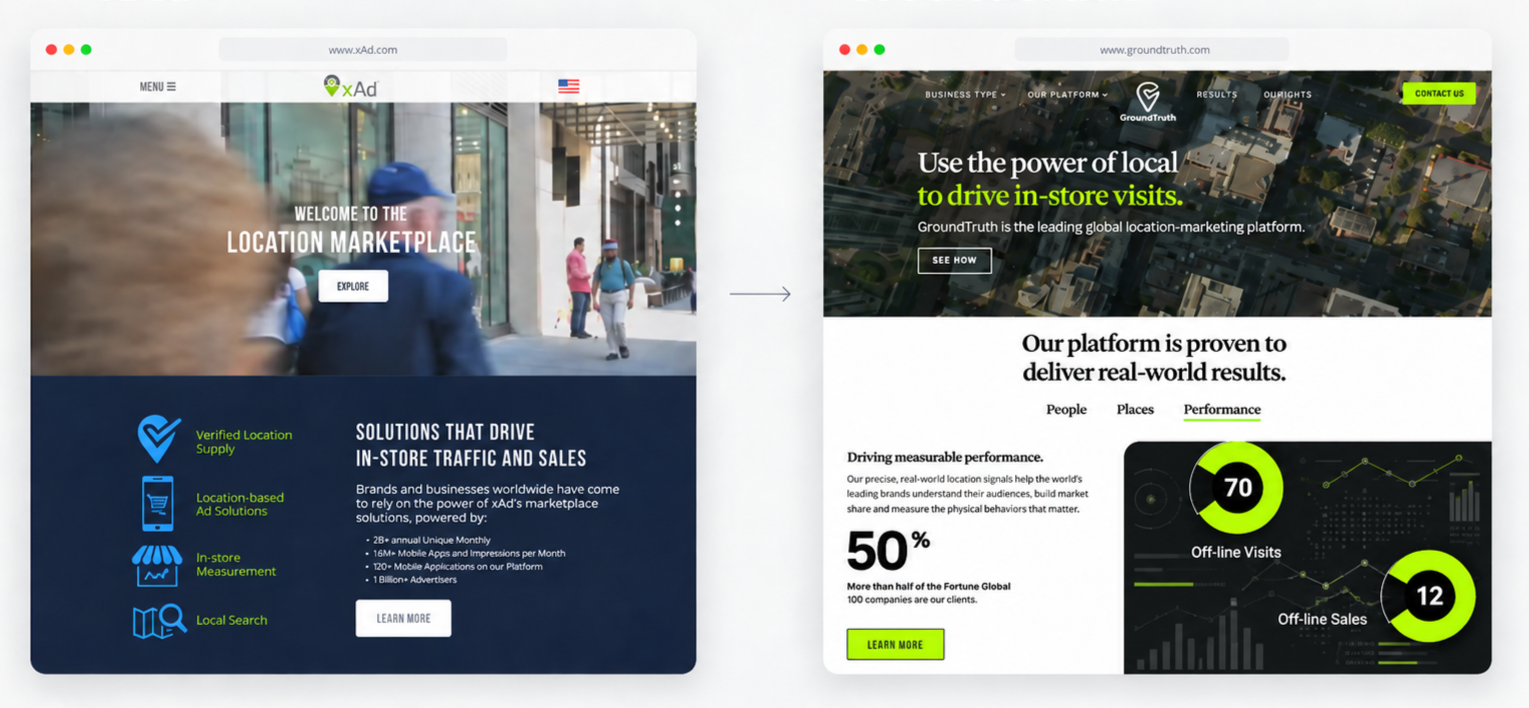
The digital experience reflected the larger strategic shift from explaining location technology to showing what it could do for customers.
INSIGHTS + THOUGHT LEADERSHIP
Turning proprietary data into market authority.
GroundTruth had visibility into billions of real-world consumer movements. Rather than keep that intelligence inside the product, we turned it into a marketing asset that helped customers understand shifting behavior, emerging trends and what those changes meant for their businesses.
Our goal was to make GroundTruth more than a technology provider. If we could show what was happening in the physical world, we could become a source the market looked to for answers.
1. The Value of a Visit
Turning research into category authority.
As ecommerce dominated the retail narrative, we saw an opportunity to establish a differentiated point of view: physical visits still mattered.
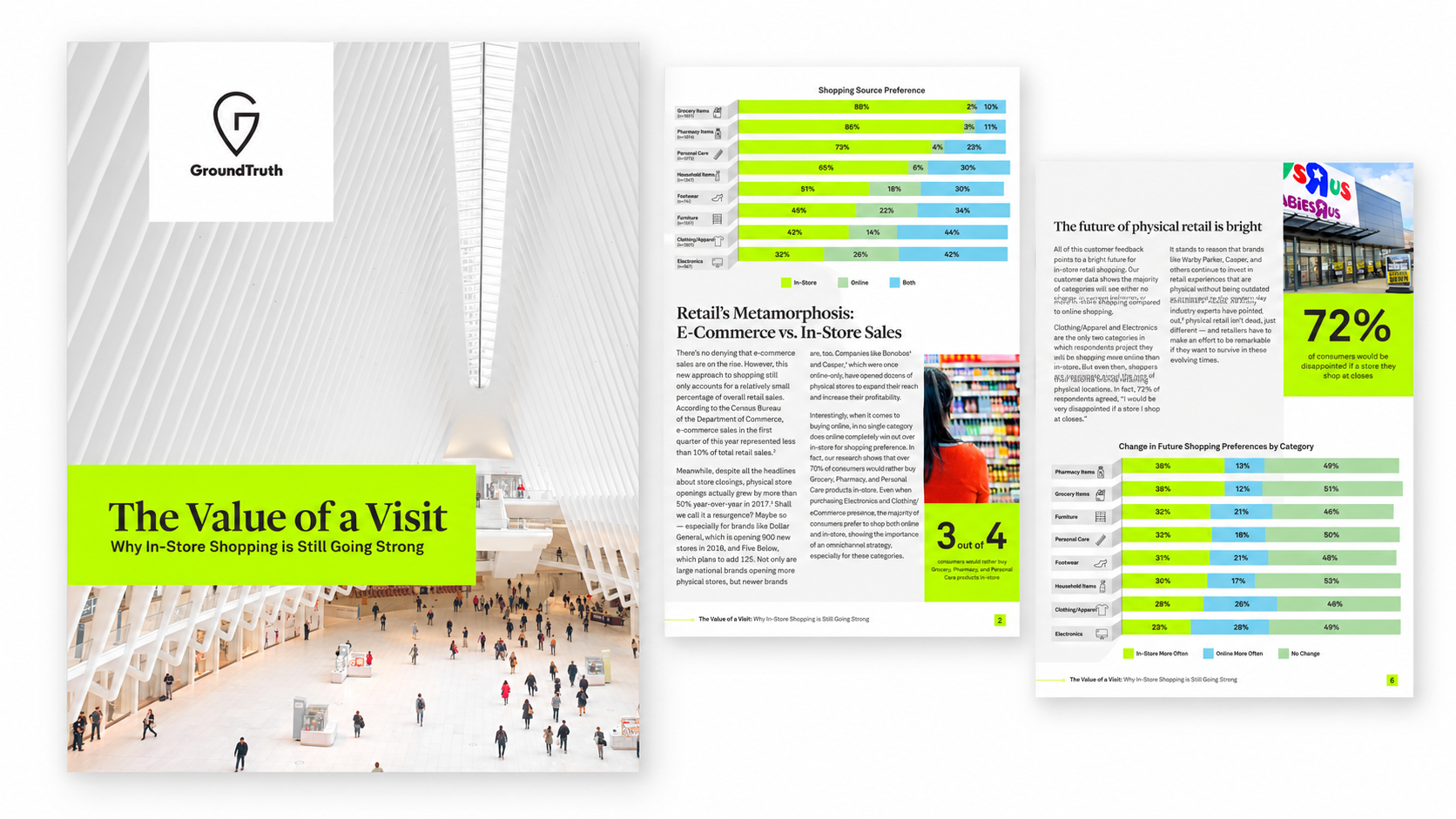
The Value of a Visit used original research with more than 2,000 consumers to challenge the “retail is dead” narrative and establish GroundTruth as an authority on physical consumer behavior.
Create an ownable point of view. Reframe store visits as a measurable business outcome connected directly to GroundTruth’s capabilities.
Build authority beyond the product. Use original research as evidence, not just marketing claims.
Give the story news value. Develop strong statistics and counterintuitive findings that could fuel earned media and industry conversation.
2. The Lean
Turning proprietary data into vertical intelligence.
GroundTruth had a wealth of behavioral data, but prospects didn’t need another long research report. We created The Lean, a vertical-specific insights series designed to make that intelligence fast, useful and easy to act on.
Built for specific core industries. Each brief focused on the trends and behaviors most relevant to retail, restaurants and automotive.
Designed to be consumed quickly. Short, highly visual briefs surfaced the key takeaways immediately.
Made to be reused. Charts, statistics and insights were presentation-friendly, giving prospects and Sales content they could drop directly into their own decks and conversations.
3. COVID-19 Foot Traffic Tracker
Making real-world behavior actionable in real time.
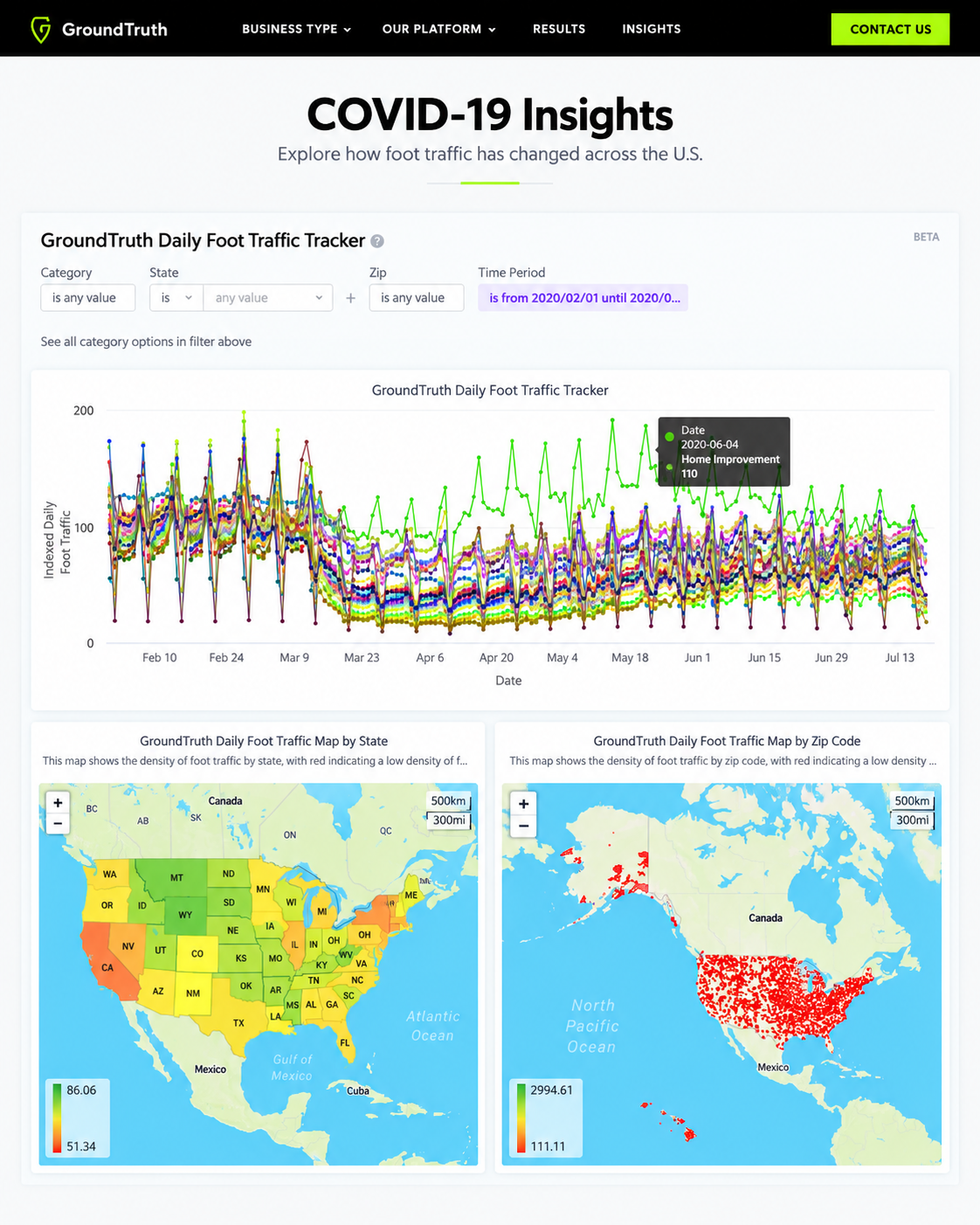
During COVID, consumer movement was changing too quickly for traditional research cycles. GroundTruth’s data gave us a live view into shifting foot traffic, so we turned that capability into an interactive insights product.
Built for a rapidly changing market. Marketers could track changes as they happened rather than relying on backward-looking reports.
Useful across every vertical. Users could explore behavior by category, state and ZIP code.
Turned insights into lead generation. Registration gave prospects something genuinely useful while creating an engaged audience for follow-up.
Made the product tangible. Buyers could experience the value of GroundTruth’s data rather than simply hearing us describe it.
TRUST + CREDIBILITY
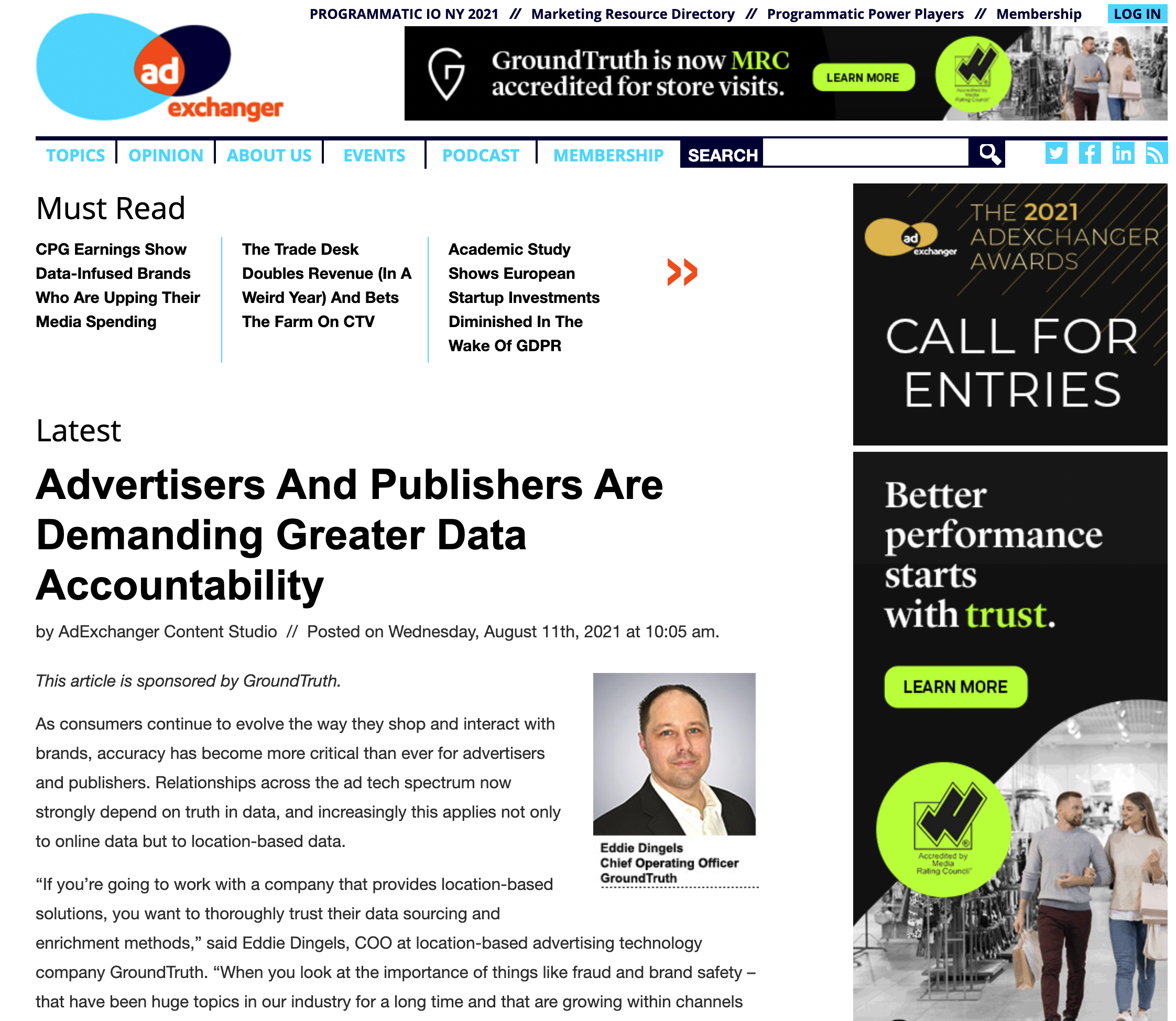
For location data to influence major marketing decisions, buyers had to trust what was underneath it. GroundTruth earned MRC accreditation for visits, providing rigorous third-party validation of its measurement practices.
We turned that credential into a customer-facing idea: greater confidence in the data behind their marketing decisions.
Translate accreditation into customer value. Make MRC more than an industry credential—it became proof behind GroundTruth’s accuracy and accountability story.
Build a campaign around trust. “Better performance starts with trust” carried across advertising, content, digital and sales materials.
Give Sales stronger proof. Independent validation helped differentiate GroundTruth in a crowded category.
* The Media Rating Council (MRC) independently audits and accredits media measurement services against rigorous industry standards. Accreditation requires a detailed audit and ongoing annual review.
Turning trust into a differentiator.
BETTER PERFORMANCE STARTS WITH TRUST.
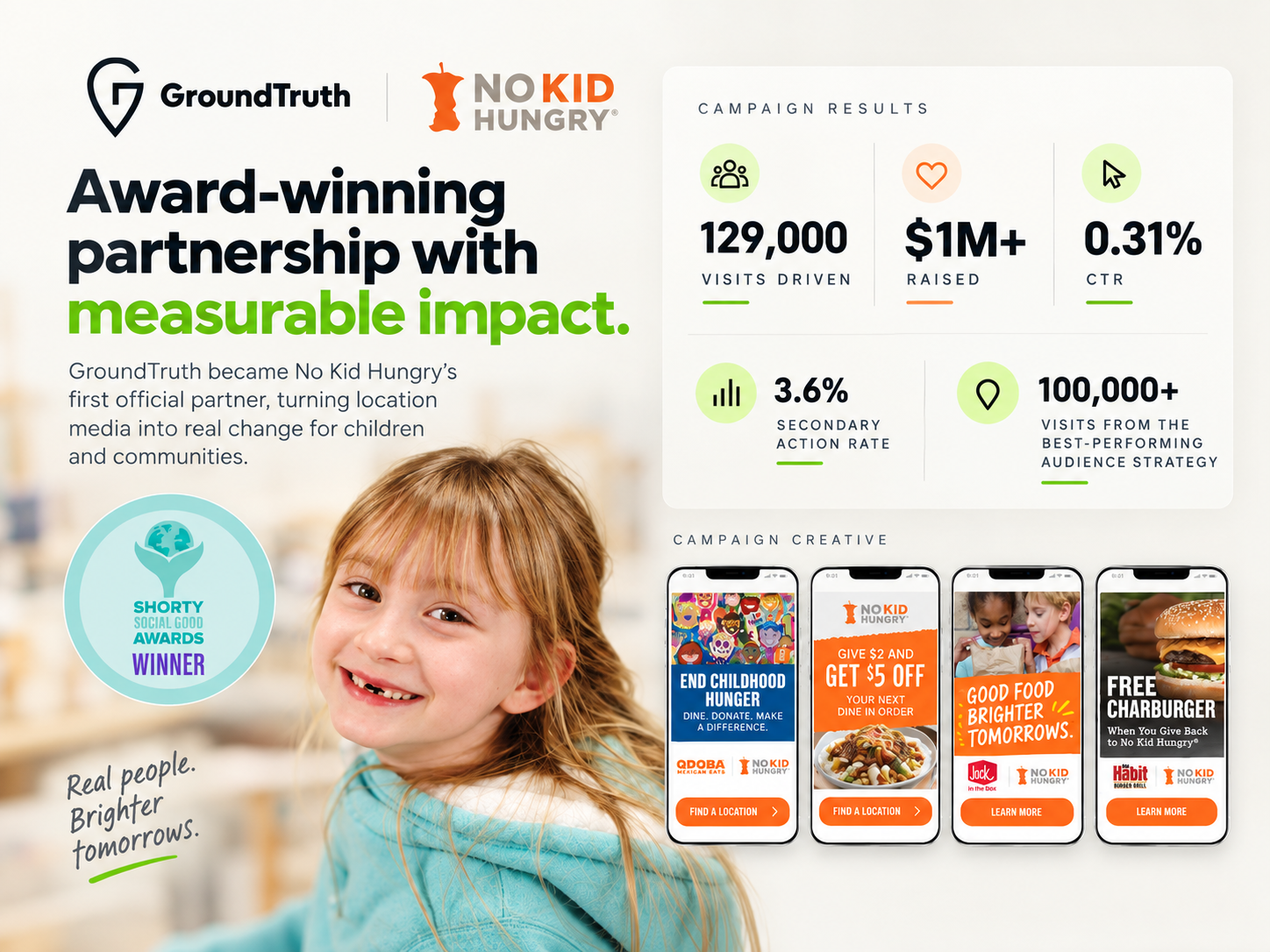
I wanted GroundTruth’s social-impact work to reflect what the company could uniquely contribute—not simply what it could donate. I helped build our relationship with No Kid Hungry into an official partnership that used GroundTruth’s location technology to connect families with food resources and help restaurant partners drive participation and donations.
The result was a platform that combined social impact, measurable outcomes and brand purpose.
Putting our technology to work for good.
PURPOSE + PARTNERSHIPS
1. Build a partnership, not a sponsorship.
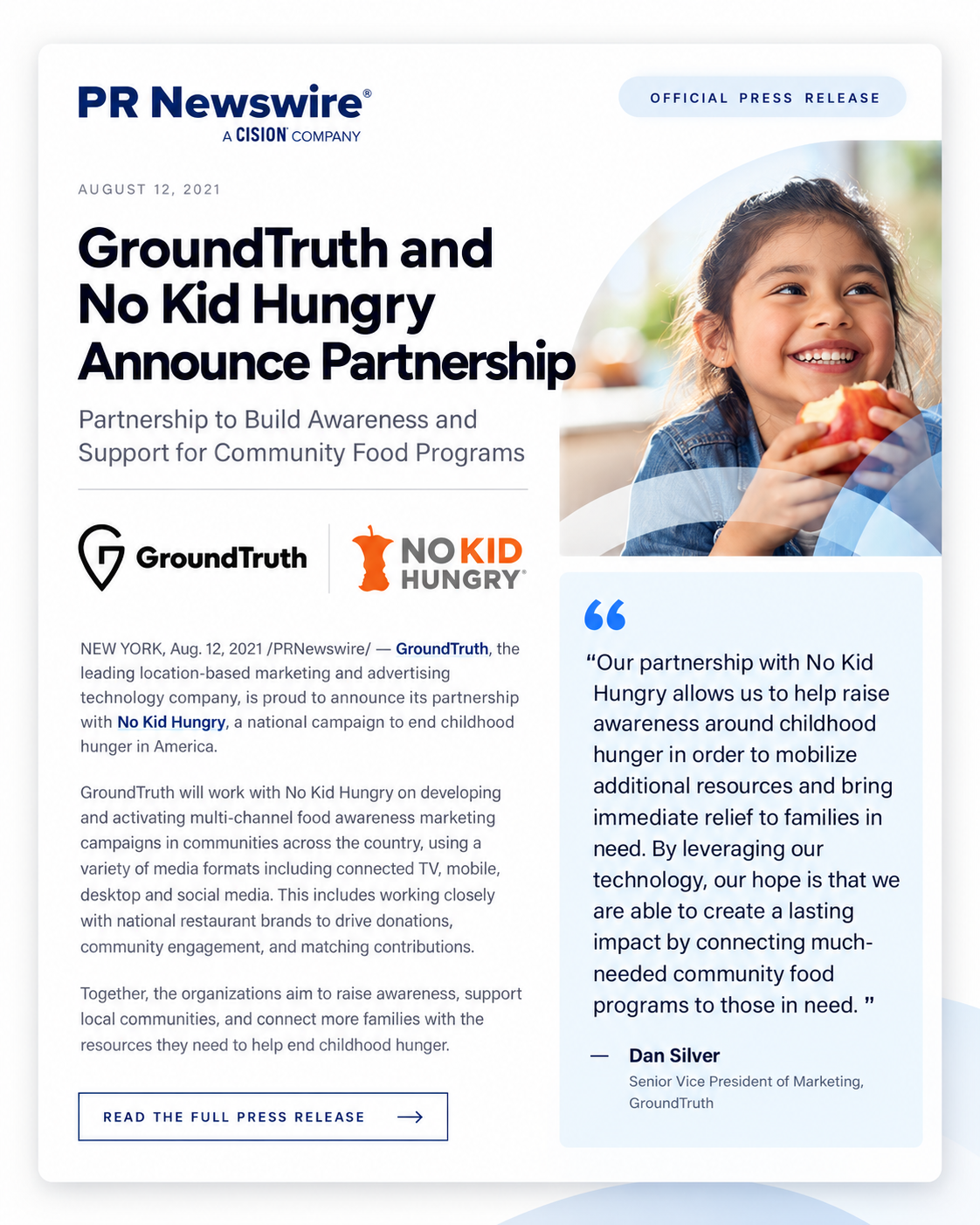
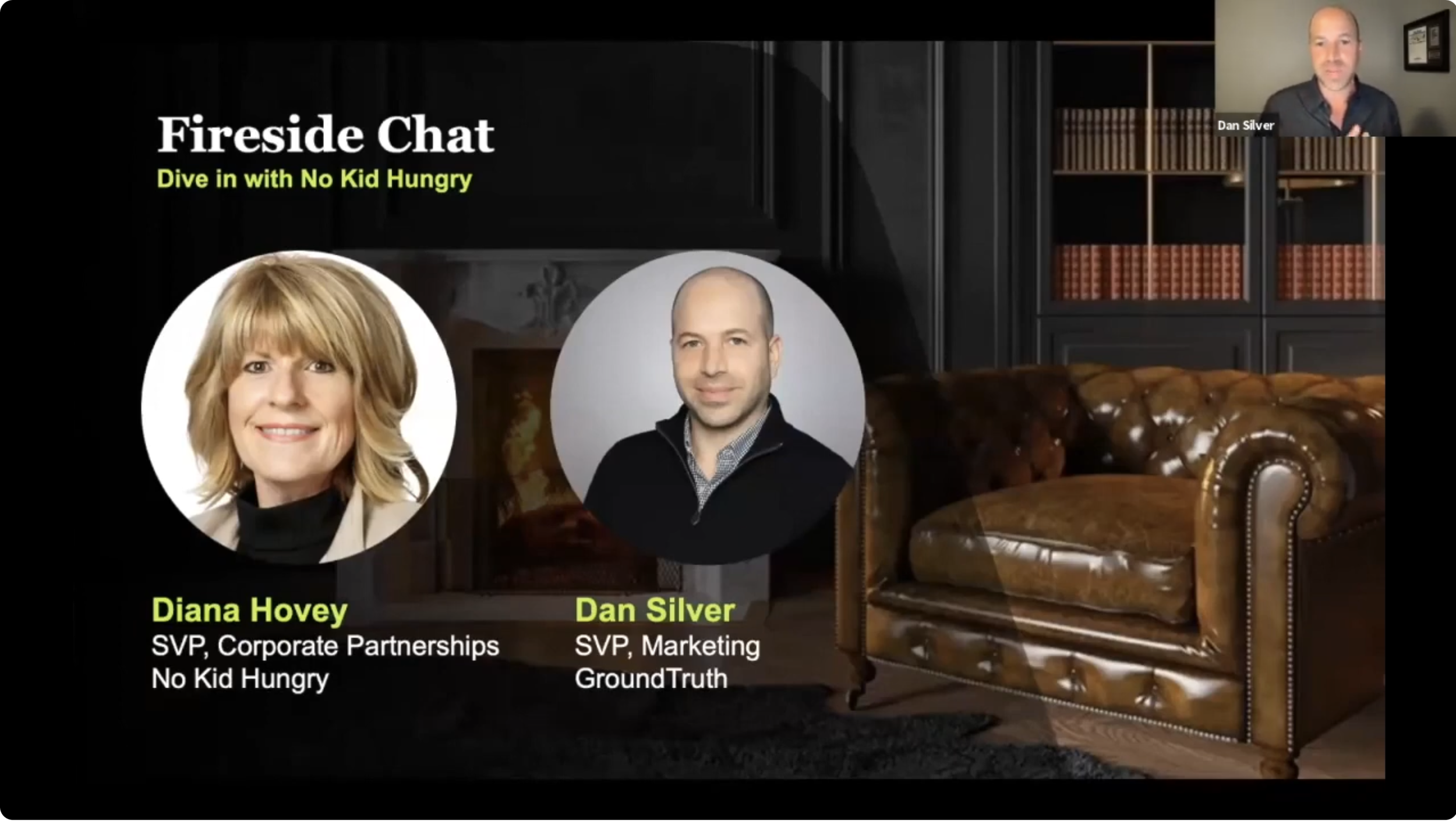
What began with Dine for No Kid Hungry grew into an ongoing relationship spanning restaurant fundraising, COVID relief, emergency benefits awareness and broader community support. In 2021, GroundTruth became No Kid Hungry’s first official corporate partner.
2. Use the product to create measurable impact.
The work proved that the same technology we sold to marketers could also help solve real community problems. The original Dine Out campaign drove 129,000 restaurant visits, while a later COVID relief campaign drove 11,500 visits to meal distribution sites in New York City.
3. Turn impact into a brand platform.
The partnership created customer stories, executive content, speaking opportunities and thought leadership around using technology for social good. The COVID relief work was recognized with a Shorty Social Good Award in the Business-to-NGO category.